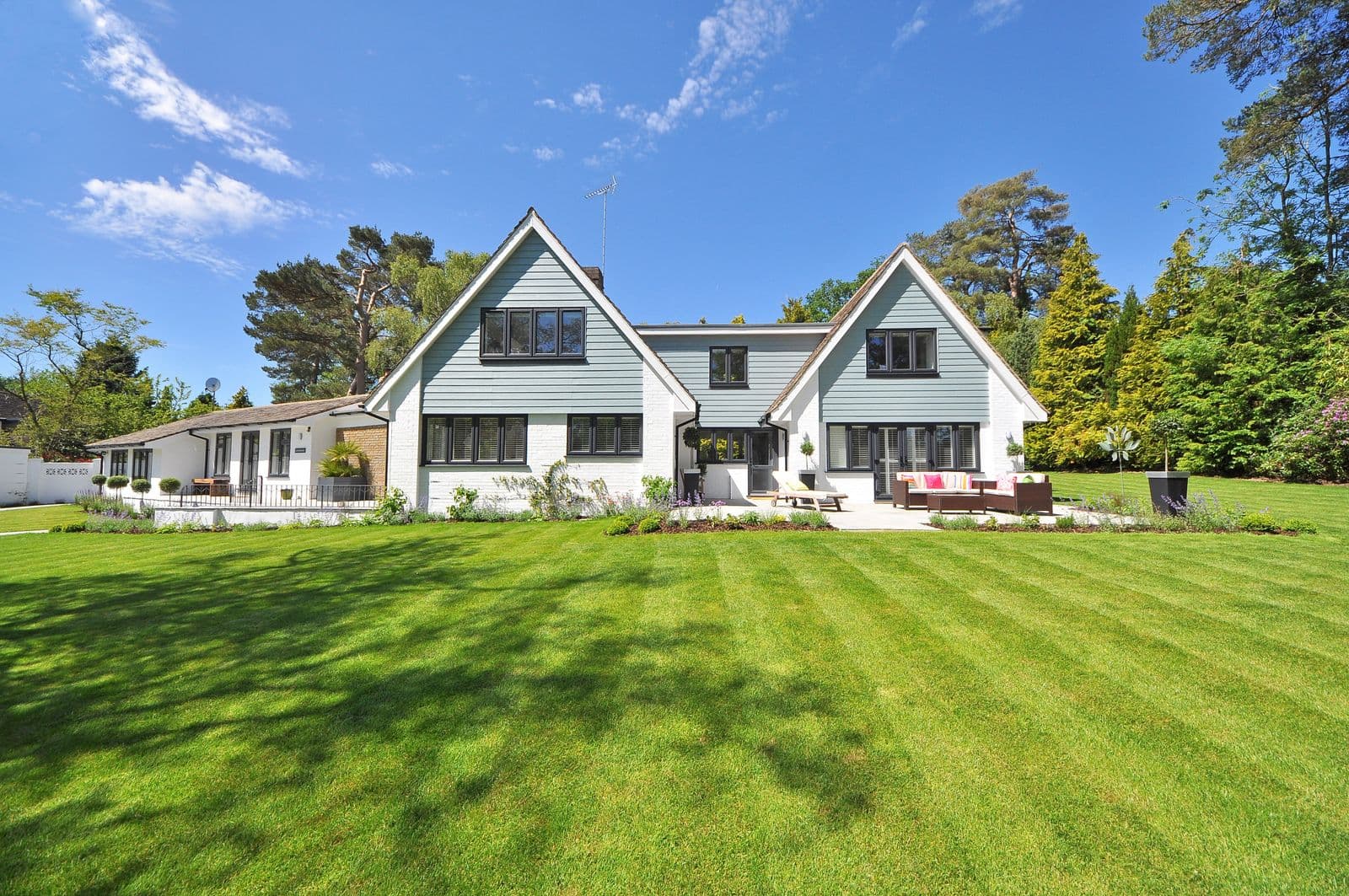
House prices slow as rents hold steady: 23 October 2026
The ONS reported slowing house price growth and unchanged rent inflation this week, alongside new protections for domestic abuse survivors in social housing and a 20 per cent rise in housebuilding starts.
Image: Pexels
The ONS published its monthly house price and rent figures on 21 October 2026, showing house price growth slowing for the fourth consecutive month while rent inflation remained unchanged. The government also announced new protections for domestic abuse survivors in social housing and confirmed housebuilding starts rose by a fifth in the year to June.
What do the October 2026 house price figures show?
The ONS reported in October that average UK house prices stood at 273,000 pounds in August 2026, up 0.9 per cent from August 2025. This marked the fourth consecutive month of slowing annual growth, down from 1.2 per cent in July. On a monthly basis, prices fell 0.2 per cent between July and August on a seasonally adjusted basis.
Regional differences remained pronounced. In England, average prices rose just 0.4 per cent annually to 294,000 pounds, while Wales saw 3.1 per cent growth to 216,000 pounds and Scotland recorded 2.9 per cent growth to 198,000 pounds. Northern Ireland reported the strongest growth at 9.2 per cent in the second quarter of 2026, reaching 202,000 pounds, though the ONS noted this figure reflected stamp duty changes in April 2025.
London prices fell 2.2 per cent in the year to August 2026, the ONS reported. The capital's average price of 554,000 pounds sat 15,000 pounds below the July 2025 peak. Flats in London dropped 5 per cent annually, and because flats account for around half of all London sales compared with one fifth across Great Britain, this pulled down the overall London figure. The North East recorded England's highest regional growth at 3.2 per cent, though this was down from 4.7 per cent in July.
How did private rents change in September 2026?
Average UK monthly private rent stood at 1,406 pounds in September 2026, up 3.8 per cent from September 2025, the ONS reported on 21 October. This annual growth rate was unchanged from August, ending a period of gradual slowing. In England, rents averaged 1,466 pounds, up 4 per cent annually, while Wales saw 4.1 per cent growth to 848 pounds and Scotland recorded much lower growth of 0.7 per cent to 1,011 pounds.
Within England, the North West had the highest rent inflation at 5.7 per cent in the year to September, down slightly from 5.8 per cent in August. London and the South East both recorded the lowest regional growth at 3.5 per cent. The ONS noted that rent inflation for new and existing tenancies combined had been above house price inflation for most of the past two years.
HighlightThe ONS warned in October that UK house price index revisions may be larger than historical norms because transaction volumes for older periods and new builds remain lower than they have been historically.
What does this mean for buyers and renters?
Slowing house price growth may offer some breathing space for prospective buyers, particularly in regions where prices have been rising fastest. However, the House of Commons Library reported on 21 October that the average rate for a new two-year fixed-rate mortgage was 4.92 per cent in August 2026, just under one percentage point higher than at the start of the year, despite the Bank Rate remaining at 3.75 per cent since June.
For renters, the unchanged inflation rate of 3.8 per cent means rents continue to rise faster than general inflation, which stood at 3.1 per cent in August 2026 according to the Bank of England's September meeting minutes. Those looking to rent in the North West face the steepest annual increases, while London and the South East, despite being the most expensive regions, saw the slowest rent growth. Anyone concerned about affordability should speak to a qualified, regulated adviser about their personal circumstances.
What policy changes were announced this week?
The Ministry of Housing, Communities and Local Government announced on 20 October that new measures had been tabled for the Social Housing Bill to protect domestic abuse survivors. The amendments, which apply to England, will allow survivors to keep their social housing tenancy while the perpetrator is made to leave, without having to prove abuse again where a protection order is already in place. The Social Housing Bill was introduced to Parliament on 14 May 2026.
The government also confirmed on 20 October that councils will have more control over protecting eligible rural areas from Right to Buy. The wider package of reforms is expected to keep an additional 18,000 homes in the social sector over the next decade, the ministry stated. Social housing tenants will also get stronger support to take charge of repairs through a simpler Right to Manage process.
How is housebuilding progressing?
The House of Commons Library published updated housebuilding figures on 21 October, drawing on Ministry of Housing data released in September. England recorded 35,910 house building starts in the second quarter of 2026, seasonally adjusted, a 6 per cent increase on the first quarter and a 20 per cent rise on the same quarter in 2025. The library noted this was partly due to the Building Safety Regulator reporting more starts following reforms to accelerate housebuilding.
Completions stood at 35,800 in the second quarter, a 3 per cent decrease on the previous quarter but a 1 per cent increase on the second quarter of 2025. Over the year to June 2026, England saw 136,330 starts, up 15 per cent on the previous year, and 143,770 completions, unchanged from the year to June 2025. Starts remain 47 per cent below their 2023 second quarter peak, the library reported.
A debate on the delivery of council housing is scheduled in Westminster Hall on 27 October 2026. In the House of Lords on 14 October, ministers confirmed the government has no plans to amend the standard method for assessing housing need introduced in December 2024 and stated that housebuilding starts had already seen a 15 per cent increase in 2026.
The bright spot this week
Housebuilding starts in England rose 20 per cent in the year to June 2026, the strongest annual growth rate in several years, according to figures the House of Commons Library published on 21 October. The 136,330 starts recorded over the 12 months represented a significant acceleration from the 15 per cent decline seen the previous year. London saw a particularly sharp turnaround, with starts up 298 per cent in the year to June, while the North East recorded a 24 per cent rise and the North West an 18 per cent increase.
The figures suggest the government's planning reforms and Building Safety Regulator changes are beginning to translate into activity on the ground, though completions remain well below the 2021 peak. With the new National Planning Policy Framework published in August 2026 and further reforms to planning committees due to take effect on 31 October, the sector is watching closely to see whether this momentum can be sustained. Whatever the headlines bring, take time this weekend to focus on what matters most to you.
Common questions
- Why are London house prices falling while other regions see growth?
- The ONS reported in October that London prices fell 2.2 per cent in the year to August 2026, driven by a 5 per cent drop in flat prices. Flats account for around half of all London sales compared with one fifth across Great Britain, so falling flat prices have a larger impact on the overall London figure than in other regions.
- Will the Bank of England change interest rates in November 2026?
- The Bank of England's Monetary Policy Committee will announce its next decision on 5 November 2026. At its September meeting, the committee voted to hold Bank Rate at 3.75 per cent, with six members voting for no change and three voting for a 0.25 percentage point rise. The Bank does not pre-announce decisions, and anyone making financial plans should speak to a regulated adviser.
- What do the new Social Housing Bill amendments mean for tenants?
- The government announced on 20 October that amendments to the Social Housing Bill will allow domestic abuse survivors in England to keep their social housing tenancy while the perpetrator is made to leave. Survivors will not have to prove abuse again where a protection order is already in place. The bill was introduced to Parliament on 14 May 2026 and is still progressing through the legislative process.
- Are housebuilding starts high enough to meet government targets?
- England recorded 136,330 housebuilding starts in the year to June 2026, up 15 per cent on the previous year, the House of Commons Library reported in October. The government has set a target to build 1.5 million homes over the current Parliament, which began in July 2024. Whether current levels are sufficient depends on how starts and completions progress in coming quarters and how the figure compares to net additions after accounting for demolitions and conversions.
- Which English region has the highest rent inflation?
- The North West had the highest rent inflation of all English regions at 5.7 per cent in the year to September 2026, the ONS reported on 21 October. London and the South East both recorded the lowest regional rent inflation at 3.5 per cent, despite having the highest absolute rent levels.
Sources
Figures in this post come from these publications. Check the originals for the latest position.
- Private rent and house prices, UK: October 2026 (opens in a new tab), Office for National Statistics
- Domestic abusers face eviction as survivors gain housing rights (opens in a new tab), Ministry of Housing, Communities and Local Government
- Housing market: Economic indicators (opens in a new tab), House of Commons Library
- Bank rate maintained at 3.75% - September 2026 Monetary Policy Summary and Minutes (opens in a new tab), Bank of England
- Economic update: Some reasons to be cheerful amid warnings on borrowing (opens in a new tab), House of Commons Library
- Housing: National Targets - Hansard (opens in a new tab), UK Parliament
bythenumbers provides general information from published open data. It is not financial, legal, survey or property valuation advice, and figures may be out of date or incomplete. Always check anything that matters to your decision directly with the relevant authority.